
 |
 |
 |
 |
 |
 |
 |
 |
WHAT'S SO SPECIAL
ABOUT VH-EBA ANYWAY?
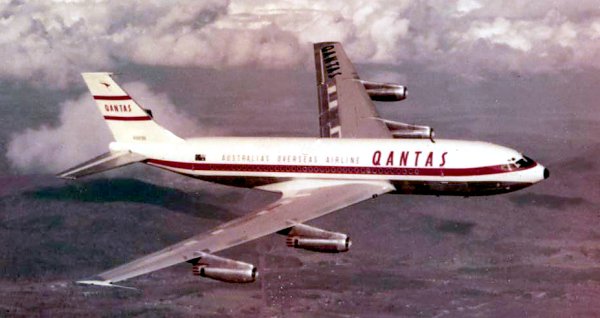
Given
that the major selling point of air travel is speed, this aeroplane is
historically significant, for it ushered in a new era for Australian air
travellers. With the advent of jet power, came a quantum leap in speed
which was not eclipsed until the advent of the Concorde. Even today, with
every surviving Concorde relegated to the status of museum exhibit, the
latest generation jetliners are marginally slower than the 707 was in
the sixties. So impressive was the speed of the 707 that there was speculation
in the newspapers of the day that Qantas possessed an aeroplane faster
than anything operated by the RAAF. There was even mischievous speculation
in some journals that the argument might be settled with a race!
With the passage of 46 years since those heady days, it might be difficult
for some to understand why there would be any interest in trying to save
an old jetliner which lies abandoned on the other side of the world? It
can't be that the aeroplane aspires to commercial operation, for she is
well past her "use by" date and even a twilight career as an
aerial "tramp steamer" has passed her by. For this old aeroplane
to lure retired pilots and engineers away from fishing and sailing and
to seduce current pilots and engineers away from the "latest and
greatest", there must be something special about her. She must be
something special for grown men to endure sleepless nights worrying that
this aeroplane might go the way of almost all retired airliners, heartlessly
torn apart by machines normally given to earth-moving operations. She
can't be special solely because she's a Boeing 707 for there are hundreds
of them around the world. The Royal Australian Air Force still use them
as does the United States Air Force and the air forces of many other nations.
Some are still in service as freighters and plush executive jets, so why
go to the other side of the world when there are better examples closer
to home? The answer lies in the fact that this particular Boeing 707 is
indeed something special.
Rolled out of Boeing's Renton plant in February 1959, she wasn't the first
707 and she wasn't even the first 707 delivered to an airline, but she
is:
- The first jetliner
ordered by Qantas
- The first pure
jet powered aircraft ordered by any Australian civil operator
- The first pure
jet powered aircraft on the Australian Register of Civil Aircraft
- The oldest of a few remaining examples of a version of the Boeing 707 which was unique to Qantas
Aeroplanes with so many claims to fame rarely survive long enough to be appreciated for their historical significance, but here again this aeroplane is special. Not only does she survive but she is also complete and potentially flyable! Not many airlines are given the opportunity to see preserved their very first aeroplane or even their first of type. Trans-Australia Airlines (later absorbed into the Qantas Group) can make this claim. The aeroplane with which they operated their very first service in 1946, DC-3 VH-AES, survives in airworthy condition. Today, Qantas has the good fortune to have been presented with an opportunity to see their very first jet aeroplane preserved for future generations to admire.
Special? Too right!
 |
A Brief History of VH-EBA |
|
|
The Complete History of VH-EBA |
|
|
VH-EBA Photo Gallery |
|
|
VH-XBA Photo Gallery |